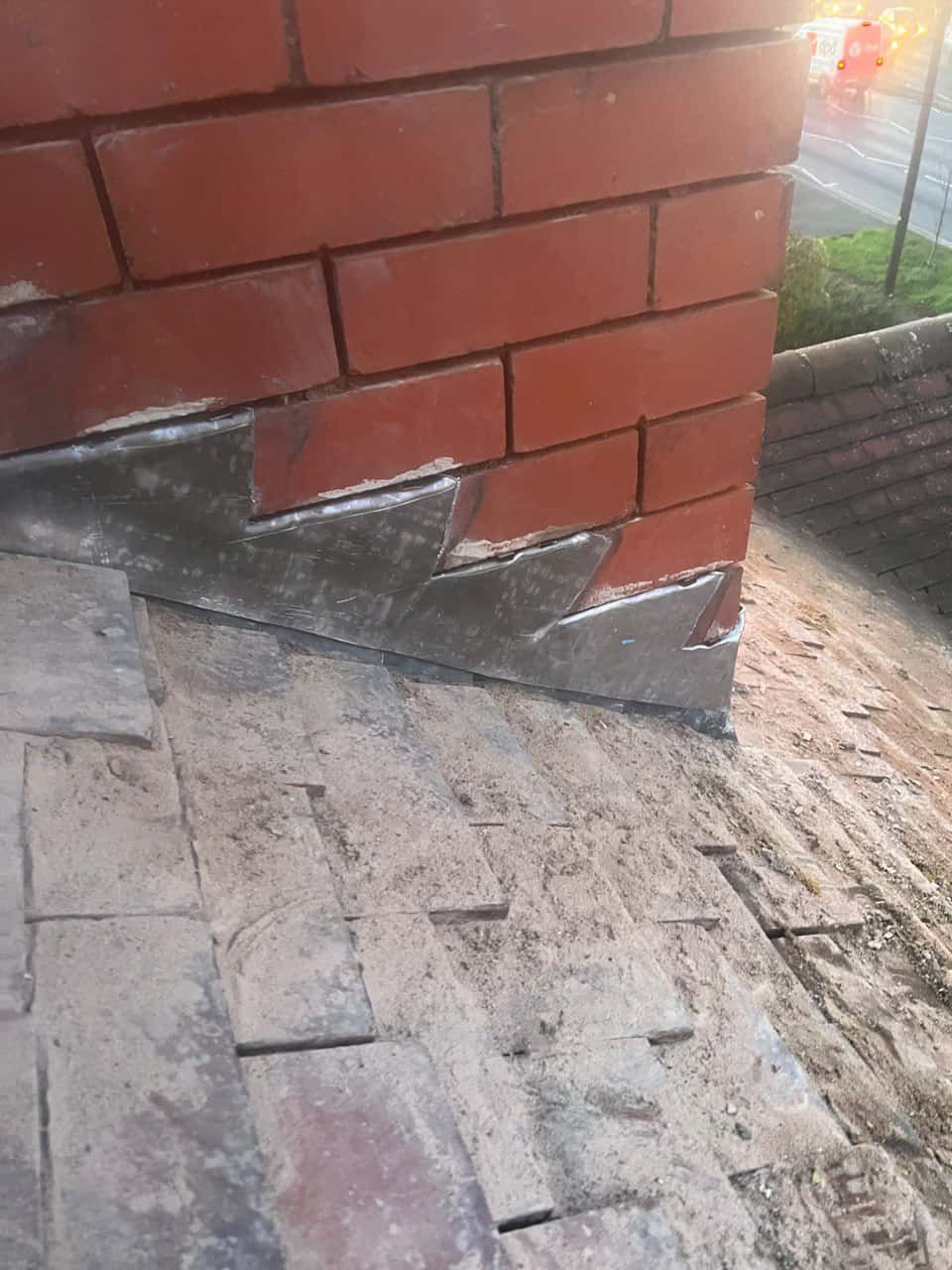
Why Are Cracks and Gaps Around Leadwork Worth Repairing Early?
Leadwork plays an important role in keeping vulnerable areas of a roof weather-resistant. It is commonly used where different roof surfaces or building elements meet, creating a durable barrier that directs rainwater away from joints and prevents moisture from reaching the construction underneath. When cracks, gaps or movement develop around these areas, however, the protection can become compromised.
For homeowners in Finedon, Northamptonshire, dealing with damaged leadwork early can prevent a relatively localised defect from developing into a more complicated roofing problem. The key is to identify why the leadwork has deteriorated and repair the affected area before repeated exposure to rainfall causes further damage.
Why Is Leadwork So Important to a Roof?
The main roof covering is designed to shed rainfall, but some areas require additional weatherproofing because tiles or slates alone cannot adequately protect every junction.
Leadwork is commonly found around features such as:
- Chimneys
- Roof-to-wall junctions
- Valleys
- Changes in roof level
- Certain roof penetrations
- Other vulnerable joints and intersections
Correctly installed leadwork helps channel water away from these areas while accommodating the normal conditions experienced by a roof.
Because it protects particularly vulnerable junctions, even relatively small defects deserve attention.
What Causes Cracks and Gaps Around Leadwork?
Lead is a durable roofing material, but the leadwork and the materials surrounding it are continually exposed to changing weather conditions.
Over time, defects may develop because of movement, deterioration of adjoining materials, ageing fixings or problems with previous installation or repairs.
The important point is that a visible crack should not automatically be treated as the entire problem.
Professional inspection should establish whether the lead itself has deteriorated, whether the surrounding joint has failed or whether movement elsewhere is contributing to the defect.
Small Gaps Can Provide a Route for Rainwater
A crack or opening does not need to look particularly large to allow moisture into a vulnerable roof junction.
Rain driven by wind can reach gaps that may appear insignificant when viewed in dry conditions. Once water passes behind the weatherproofing detail, it can travel away from the original entry point before becoming noticeable inside the property.
This is one reason early lead flashing repairs are valuable. The defect may be much easier to address while deterioration remains concentrated around the original area.
Why Waiting for an Internal Leak Is Not Ideal
Homeowners sometimes assume that roofing work is only necessary once water becomes visible inside the building.
By that stage, however, moisture has already passed through part of the roofing system.
A visible ceiling mark is therefore evidence of water ingress rather than an early warning that ingress might occur.
If cracks or gaps around leadwork can already be seen, arranging an assessment before an internal leak develops gives the affected area a better opportunity to be repaired while the problem remains localised.
Water Can Travel Away From Damaged Leadwork
Roof leaks can be difficult to diagnose because the place where water appears internally may not be directly beneath the defect.
Once moisture passes through a vulnerable junction, it may follow roofing materials or other parts of the construction before becoming visible elsewhere.
This can make a seemingly straightforward leak more difficult to trace.
Examining the leadwork and surrounding roofing materials helps identify the actual route of water ingress rather than concentrating solely on the internal damp patch.
Cracks Can Gradually Become More Significant
Roofing defects rarely improve without attention.
If a gap has formed because materials are moving or deteriorating, continued exposure can allow the weakness to become more pronounced. Further weathering may affect the surrounding joint, while repeated rainfall increases the opportunity for moisture to enter.
Early repairs are therefore not simply about improving appearance. They are about restoring the weatherproofing detail before the affected area becomes more vulnerable.
The Surrounding Materials Should Also Be Checked
A leadwork repair should not focus solely on the most obvious crack.
The condition of adjoining tiles, slates, mortar and other relevant roofing materials can help explain why the defect has appeared.
For example, repairing one visible gap may not provide a satisfactory result if the materials supporting or surrounding the leadwork are also deteriorating.
A professional inspection considers the complete junction so that the repair addresses the cause as well as the visible symptom.
Chimney Leadwork Is Particularly Important
The point where a chimney passes through a pitched roof creates several junctions that need effective weatherproofing.
Lead flashing is commonly used to prevent rainfall from entering around these transitions.
If gaps develop around chimney leadwork, water can potentially reach the roof construction even though the main tiles or slates remain in good condition.
Signs that deserve investigation include visible lifting, cracking, separation around joints or dampness appearing internally near the chimney area.
Prompt attention can help prevent a local flashing defect from becoming a recurring leak.
Roof-to-Wall Junctions Can Also Become Vulnerable
Where a roof meets a vertical wall, the transition needs to remain properly protected against rainfall.
If leadwork pulls away, cracks or develops openings along the junction, the effectiveness of that weatherproofing can be reduced.
These defects are particularly worth addressing before they spread along a larger section of the joint.
The appropriate repair will depend on the condition of the existing leadwork and the surrounding roof rather than simply the size of the visible gap.
Why Temporary Patching May Not Solve the Cause
Applying material over a crack may appear to provide a quick solution, but it does not necessarily explain why the opening developed.
If movement remains present, or the leadwork itself is incorrectly fitted or deteriorated, the problem can return.
Professional leadwork repair should instead determine:
Where is water potentially entering?
The visible gap and surrounding junction need to be assessed.
Why has the defect developed?
Movement, deterioration or failure of adjoining materials may be contributing.
How much of the leadwork is affected?
Damage may extend beyond the most obvious visible section.
Are surrounding roofing materials still sound?
The repair needs a suitable and stable area around it.
This approach provides a better basis for a dependable repair than repeatedly covering the same symptom.
Damaged Leadwork Can Affect an Otherwise Sound Roof
One important point about flashing defects is that the main roof covering may still be in good condition.
A roof does not need widespread tile or slate damage to develop a leak. One compromised weatherproofing detail can provide sufficient opportunity for rainfall to enter.
This is why localised lead flashing repairs can be so valuable.
When the surrounding roof remains serviceable, addressing the defective junction can restore protection without assuming that more extensive roofing work is automatically required.
Recurring Leadwork Problems Deserve Further Investigation
If the same section has been repaired repeatedly, it is worth determining why the defect continues to return.
Repeated failure can indicate that previous work has addressed the visible gap without correcting the underlying issue.
Similarly, several areas of deteriorating leadwork may indicate that the roof requires a broader assessment.
A professional roofer can determine whether another localised repair is appropriate or whether a larger section of leadwork needs attention.
Early Repairs Can Help Protect the Roof Beneath
Leadwork is positioned where it can prevent water from reaching vulnerable parts of the roofing construction.
Once that barrier becomes compromised, the materials behind or beneath it may be exposed to moisture.
Repairing the defect promptly helps restore the intended protection before repeated water ingress has an opportunity to affect a wider area.
This is particularly important because damage hidden beneath the visible roof covering may not be immediately obvious from ground level.
When Should Leadwork Be Inspected?
You do not necessarily need to wait until a leak develops.
Professional attention is worth considering when you notice:
- Visible cracks in or around leadwork
- Gaps developing at roof junctions
- Lead sections lifting or moving
- Separation from adjoining materials
- Deterioration around previous repairs
- Dampness appearing near a roof junction
- Problems developing after difficult weather
The earlier the condition is assessed, the easier it is to understand whether the defect remains isolated.
Why Professional Leadwork Repairs Matter
Leadwork needs to function as part of the wider roofing system. Repairing it correctly requires an understanding of how water moves across the roof, how the relevant junction is constructed and why the existing detail has failed.
At FDC Roofing Finedon, we provide professional roof repairs, leadwork repairs and roofing services throughout Finedon, Northamptonshire.
When cracks or gaps develop around lead flashing, our focus is on assessing the affected junction and surrounding roof before determining the appropriate repair. This helps ensure that attention is given to the source of the problem rather than simply concealing the most obvious opening.
Early Attention Can Prevent a Local Defect From Spreading
One of the strongest reasons to repair leadwork early is that the initial problem may be relatively contained.
If the surrounding roof remains sound and the defect is addressed promptly, focused repair work may be all that is required.
Allowing water ingress to continue can change that situation. What began as a small weatherproofing defect may eventually affect adjoining materials or create recurring internal dampness.
Recognising the problem early therefore gives homeowners the opportunity to act before the roof requires more extensive attention.
Conclusion
Cracks and gaps around leadwork are worth repairing early because these materials protect some of the most vulnerable junctions on a roof. Even a relatively small opening can provide a route for wind-driven rain, and water may travel beyond the original defect before becoming visible inside the property.
Effective repair involves more than covering the crack. The condition of the leadwork, adjoining roofing materials and underlying cause should all be assessed so that the appropriate work can be completed.
For homeowners in Finedon, Northamptonshire, FDC Roofing Finedon provides professional leadwork and roof repair services. If you have noticed cracked, lifting or separated leadwork, contact us to arrange an assessment before a localised defect has the opportunity to develop into a more significant roofing problem.
Call us on: 01933 829 064
Click here to find out more about FDC Roofing Finedon
Click here to complete our contact form and see how we can help with your roofing needs.